
How Shockwave Therapy Helps Active People Stay Pain Free in Bozeman
Living in Bozeman means staying active. From hiking Hyalite to skiing Bridger Bowl, the lifestyle here demands a lot from your body. As chiropractors who work with active individuals every day, we regularly see the wear and tear that comes with that level of activity. The good news is that you do not have to push through nagging pain or let it limit what you enjoy. One of the most effective tools we use to help people recover and keep moving is shockwave therapy. This advanced soft tissue treatment is especially helpful for chronic conditions such as plantar fasciitis, tennis or golfer’s elbow, tendinopathies, and post surgical scar tissue, helping to restore function and get you back to doing what you love.
Why Shockwave Therapy Matters in Bozeman’s Active Community
Bozeman is built around movement. Whether you are climbing, skiing, running trails, or training year round, your body is constantly being pushed. Over time, that demand adds up and often shows up as persistent soft tissue pain that does not fully resolve on its own.
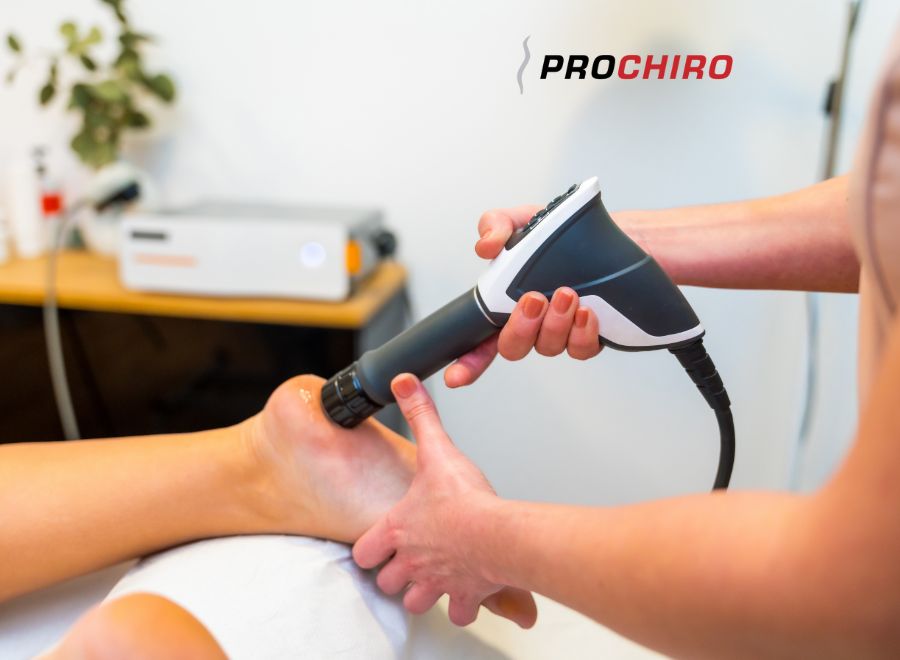
Shockwave therapy is a non invasive, evidence informed treatment that delivers high energy acoustic waves into targeted tissues. These waves pass through healthy tissue and stimulate areas of irritation, degeneration, and densification, which are often the true source of pain. The goal is to create a controlled healing response by increasing blood flow, breaking down dysfunctional tissue, and stimulating regeneration. Much like strength training creates micro stress to build stronger muscle, shockwave therapy encourages the body to rebuild stronger, healthier soft tissue.
One of the reasons we value shockwave therapy so highly at Pro Chiropractic is its versatility. It can be effectively applied to muscles, tendons, ligaments, and scar tissue throughout the body, especially in cases where traditional treatments have not fully resolved the issue.
Are you a climber dealing with stubborn elbow or forearm pain? You are not alone. Repeatedly pulling your bodyweight creates significant stress on the flexor and extensor tendons, often leading to chronic irritation. Many people consider injections or rely on anti inflammatories just to get through a session. Shockwave therapy offers a different approach by targeting the underlying tissue changes and helping restore strength and resilience where you need it most.
Are you a trail runner who cannot shake that nagging heel pain? Plantar fasciitis is one of the most common issues we see in Bozeman, often driven by repetitive load, terrain, and foot mechanics. Changing shoes can help, but it does not always address the root cause. Shockwave therapy works directly on the affected tissue to promote healing and improve function, helping you get back to running without constantly managing pain.
If you are active in Bozeman and dealing with ongoing soft tissue pain, shockwave therapy can be a powerful tool to help you recover, rebuild, and keep doing what you love.
Understanding Shockwave Therapy: The Basics
Shockwave therapy is powerful due to its non-invasive nature, and low impact on current training plans. It can be used in the middle of your competition season and provides for little to no interruption in training.
What it does: Shockwave therapy stimulates increased blood flow, tissue regeneration, and even stem cell proliferation. As mentioned before, shockwave treatments aim to create microtrauma within targeted tissues, breaking down densifications and jumpstarting the healing process.
Safety and evidence overview: Shockwave has been used for many years and in many applications. Due to its non-invasive nature shockwave is inherently very safe. Following treatment, some mild redness or soreness may be present following treatment but even that is quite rare.
Shockwave Therapy for Plantar Fasciitis: Getting Back on Your Feet
Condition overview:
Plantar fasciitis is irritation of the plantar fascia, a band of dense connective tissue in the bottom of the foot that helps to create the “arch” or “tripod” shaped shock absorber in each foot. Often plantar fasciitis manifests as pain in the bottom of the foot or at the heel, usually worst in the morning or following long periods of inactivity. In order to determine if shockwave is appropriate, a full foot evaluation, including a gait scan and functional assessment will be performed.
Causes vary widely but most commonly plantar fasciitis can be traced back to improper footwear, repetitive factors such as trail running or frequent jumping, and standing for extended periods on unforgiving surfaces like that hard kitchen floor or concrete shop floor.
Shockwave treatments have shown effective management of plantar fasciitis in a huge way, significantly outperforming other therapies such as ultrasound or low level laser.
Treatment protocol: Typical treatment protocol for lasting relief from plantar fascia irritation is 6 treatments, each lasting 10-15 minutes. Each treatment includes re-evaluation of tissue tone and functionality and applying shockwave to the target tissues. Often, with the addition of manual therapies, relief starts after the first 1-2 appointments.
Whether you notice foot pain while getting ready for work in the morning or while out on the trail, shockwave therapy can likely help!
Shockwave Therapy for Epicondylitis: Easing Elbow Pain for Everyday Athletes
Condition overview:
Epicondylitis is simply the medical term for golfer’s and tennis elbow. These two conditions present very similarly, the main difference being the location of symptoms. Epicondylitis is best described as irritation of the tendons found in the forearm, often caused by repetitive use through climbing, playing golf/tennis, or manual labor jobs that demand a lot of strength from the hands and arms.
- Shockwave therapy has been shown in research and clinical care to help reduce pain and improve function in epicondylitis cases.
- Treatment protocol: Due to the wide variation in tissue depth and level of injury, treatment protocols can vary between 4-10 treatments. With the application of shockwave therapy in conjunction with other manual therapies, resolution is well within reach.
- By treating the connective tissue in the forearm, patients with epicondylitis can expect to see increased grip strength, increased stamina for hand and arm movements, and significant decrease if not resolution of forearm pain.
Beyond the Basics: Shockwave Therapy for Other Common Conditions
Shockwave therapy is not just for one or two problem areas. It is an incredibly versatile tool that can help address a wide range of stubborn, activity limiting conditions we commonly see here in Bozeman.
Achilles Tendinopathy
For trail runners, skiers, and anyone who spends time on uneven terrain, Achilles pain can sneak up and become a limiting factor quickly. This type of overuse injury often lingers longer than expected. Shockwave therapy works to stimulate healing within the tendon, reduce discomfort, and improve ankle mobility so you can get back to moving with confidence.
Rotator Cuff Tendinopathy
Whether you are working overhead, paddling on the water, or training in the gym, shoulder pain can be incredibly frustrating. Rotator cuff irritation often leads to weakness, reduced range of motion, and ongoing discomfort. Shockwave therapy helps address the underlying tissue changes, supporting recovery and restoring strength so the shoulder can perform the way it should.
Calcific Tendinitis
Calcific tendinitis can be one of the more stubborn and uncomfortable conditions we see. Shockwave therapy is highly effective in breaking down calcific deposits and stimulating the body’s natural healing response. When combined with proper movement and biomechanical training, it can significantly reduce pain and improve overall function.
Patellar Tendinopathy (Jumper’s Knee)
Common in runners, lifters, and athletes who perform repetitive jumping or squatting, patellar tendon pain can make training and even daily movement uncomfortable. Shockwave therapy helps stimulate healing in the tendon, reduce chronic irritation, and improve load tolerance so you can return to activity without constantly managing knee pain.
If you have been dealing with a nagging injury that is not improving, shockwave therapy may be the missing piece to help you recover and stay active.
What to Expect: Practical Insights from Clinical Care
Once we determine that shockwave therapy is appropriate for your condition, treatment is straightforward and efficient. A typical session lasts about 10 to 15 minutes and includes reassessment of your progress, targeted application of shockwave therapy, and any additional treatments that are clinically indicated.
To enhance results, I often incorporate manual therapies such as soft tissue work and active release techniques alongside shockwave. This combination helps address both the irritated tissue and the surrounding mechanical contributors, allowing for a more complete and lasting recovery.
Who It’s For
Shockwave therapy is a great option for active adults and youth in Bozeman and Belgrade who are dealing with stubborn, nagging pain. If you have tried other treatments without success, or if your symptoms continue to limit your activity, this may be the next step.
One of the biggest advantages of shockwave therapy is that it typically has little to no downtime. Treatment plans are efficient, and most patients are able to continue their normal activities while progressing toward recovery.
Every treatment plan at Pro Chiropractic is tailored to the individual. Your history, your goals, and how your body responds to care all guide the process. There is no one size fits all approach here. The goal is not just to reduce pain, but to help you move better and return to the activities that matter most to you.
Take the Next Step
Do not let chronic soft tissue injuries continue to slow you down. Shockwave therapy is available at Pro Chiropractic in Bozeman and Belgrade, and our team is here to help you restore pain free movement. Whether you are preparing for an athletic event, staying active outdoors, or simply trying to feel better day to day, this can be a powerful addition to your care.
Get back to enjoying everything Montana has to offer without being limited by pain. Schedule your evaluation today at prochiromt.com or call 406 219 2462.
Stay tuned for the next part of our series, where we will cover additional therapies including PEMF, instrument assisted soft tissue mobilization, and more.